


Our Fall 2026 cohort is full. We’re always glad to meet new schools — reach out below.
For K & 1st Grade
You’re teaching them to share, to wait, to try again. Here’s an extra hand.
You in the classroom. Families at home. Same story, same week — so it sticks.
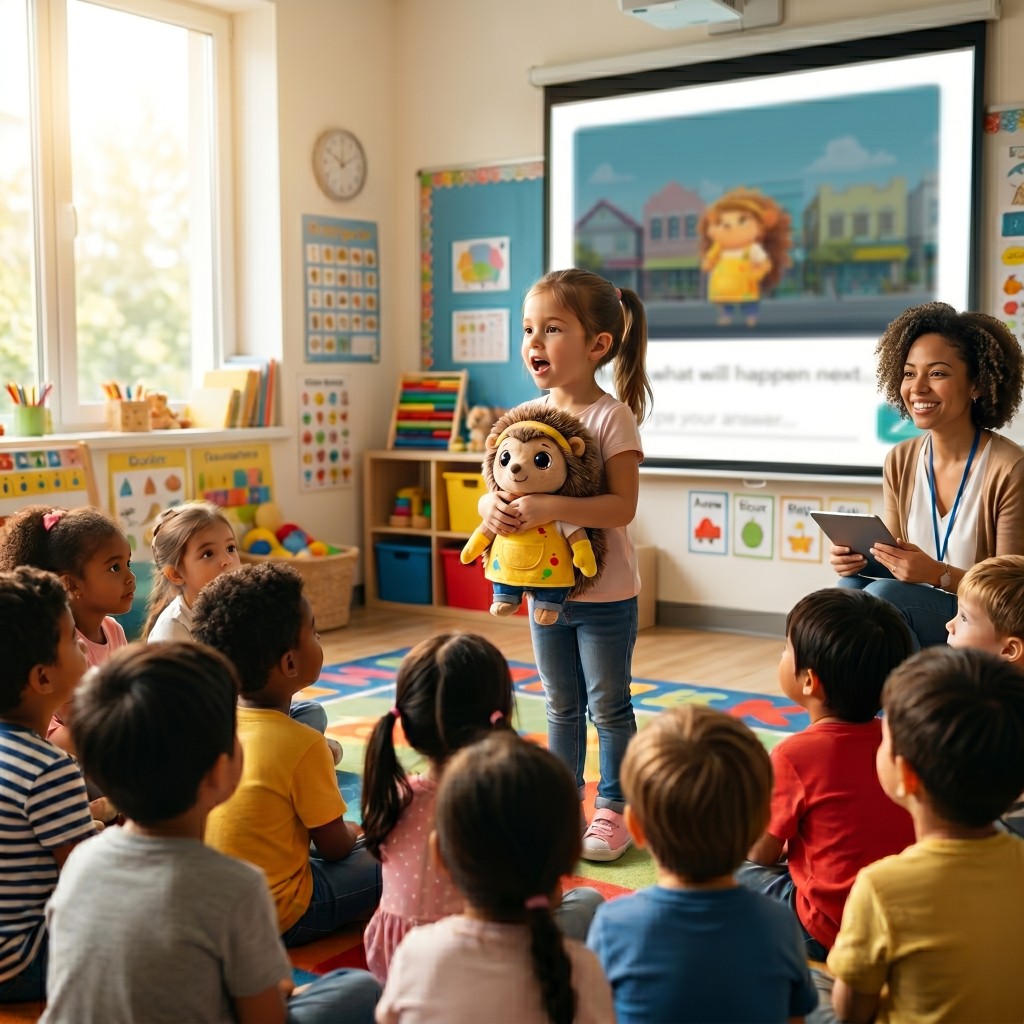
Wanderly is an interactive SEL read-aloud, built for the story-time slot you already have. The kids drive the choices, so they’re practicing the skill, not just hearing about it. Families read the same story that week, so what you start in class gets reinforced at home. Low prep, no new block of time to find, kids that can manage big feelings.
Bring Wanderly to your school
Tell us what you’re looking for and we’ll follow up personally.
- ✦CASEL-aligned
- ✦Clinician and parent approved
- ✦No devices in kids’ hands
- ✦Made for classrooms and homes together
STORY TIME · THE SLOT YOU ALREADY HAVE
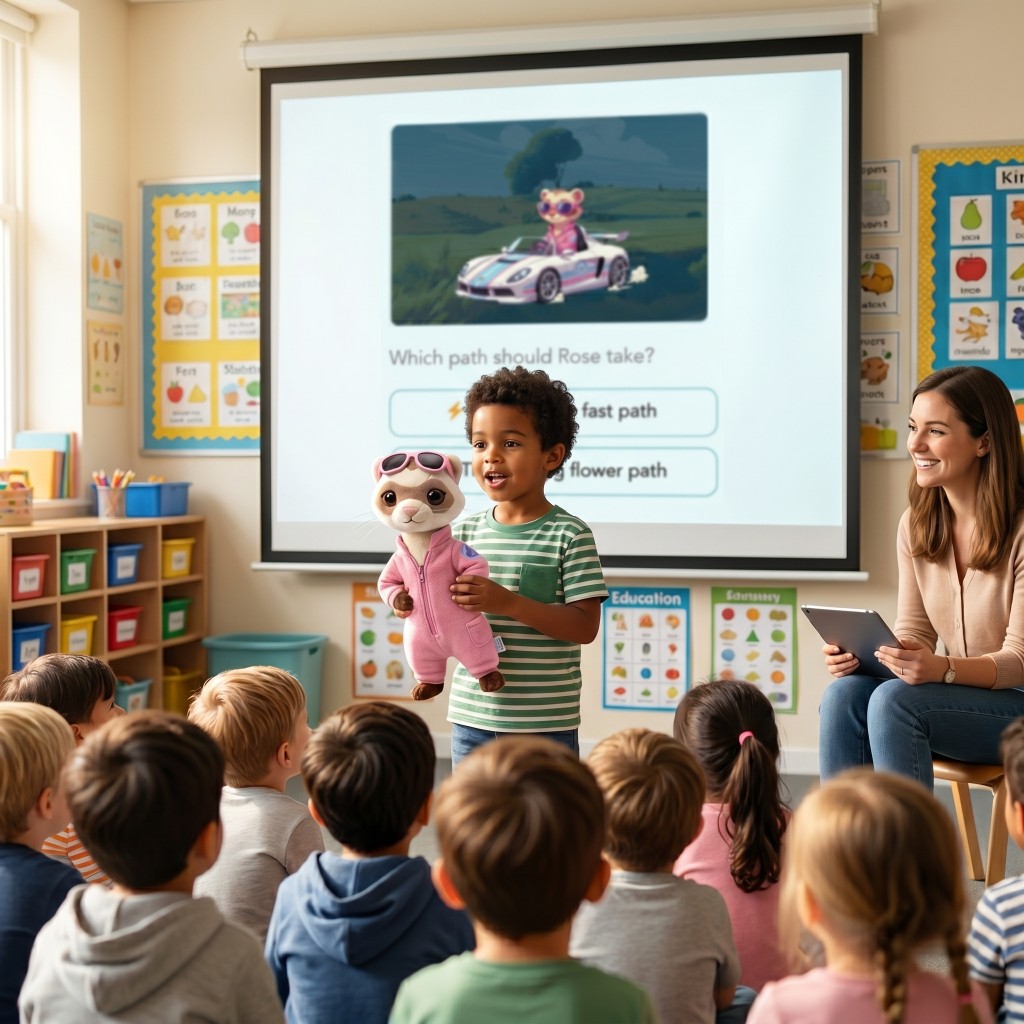
It fits right into story time. No new block of time needed.
Project or cast the week's story, gather the kids on the rug, and read it aloud — the way you do every day. At a few key moments, the class chooses what the character does next. That's the lesson.

SAME WEEK · SAME STORY
Same story at home. This time with their grown-up.
That same week, the story opens at home, now in the kid's hands. This time they lead: their character, their path, their pace. Their grown-up sits beside them, watches them think, asks questions, sees what's clicking. By Monday, home and classroom run on the same vocabulary, and you've got a parent who knows what 'big-deal vs. little-deal' or 'strong-no voice' actually sound like at home. The work you started in class doesn't end at 3. It picks up again at family read-aloud that week, in the kid's own words.
WHEN SOMETHING COMES UP
When something comes up, there’s a story for that.
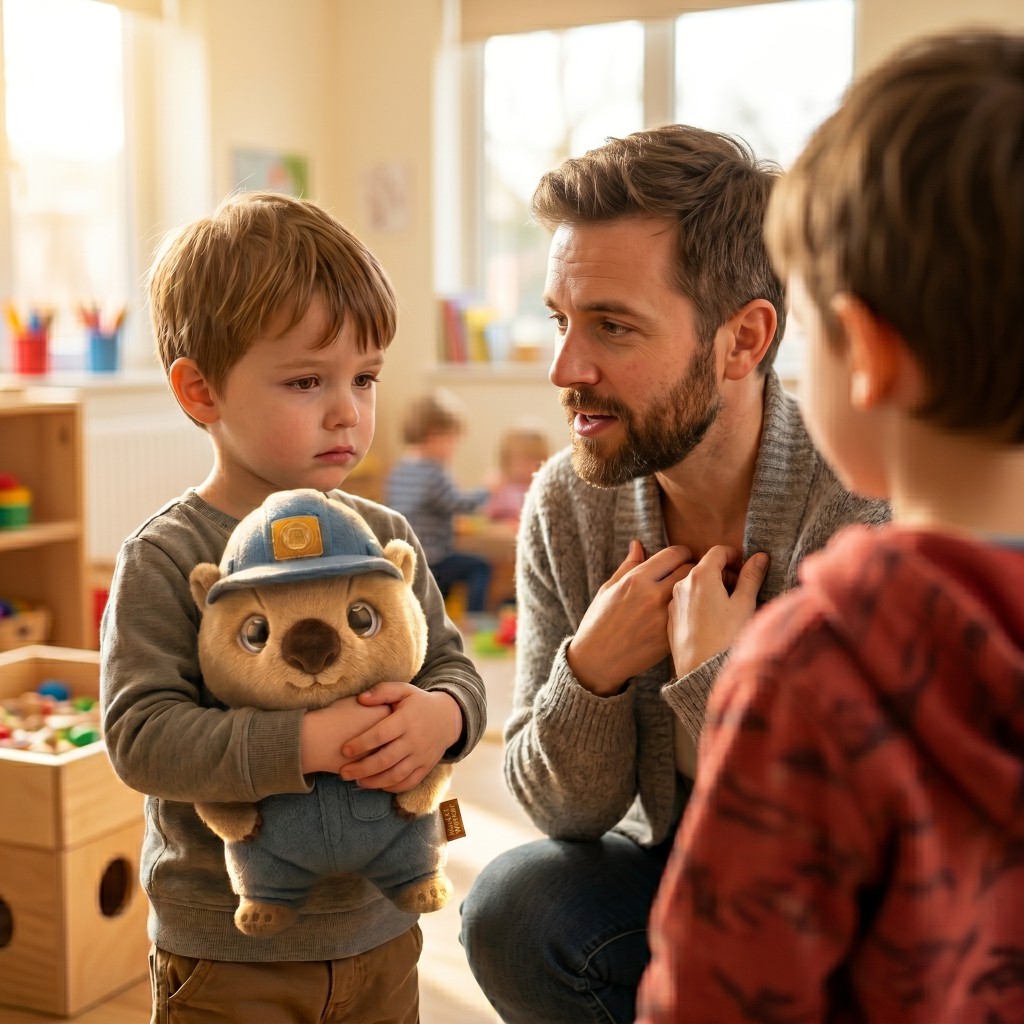
Not every week is routine. When the class needs a reset, or a specific child is struggling, you pick a one-off story from a targeted library organised by need. And if one child in particular could use extra support, you can send that story home to their family with a single tap.
What shows up at your door
The teacher kit.
One box. Everything you need for the year. Cohort schools get the full kit, and families get access too — reach out and we’ll walk through what it looks like for your school.
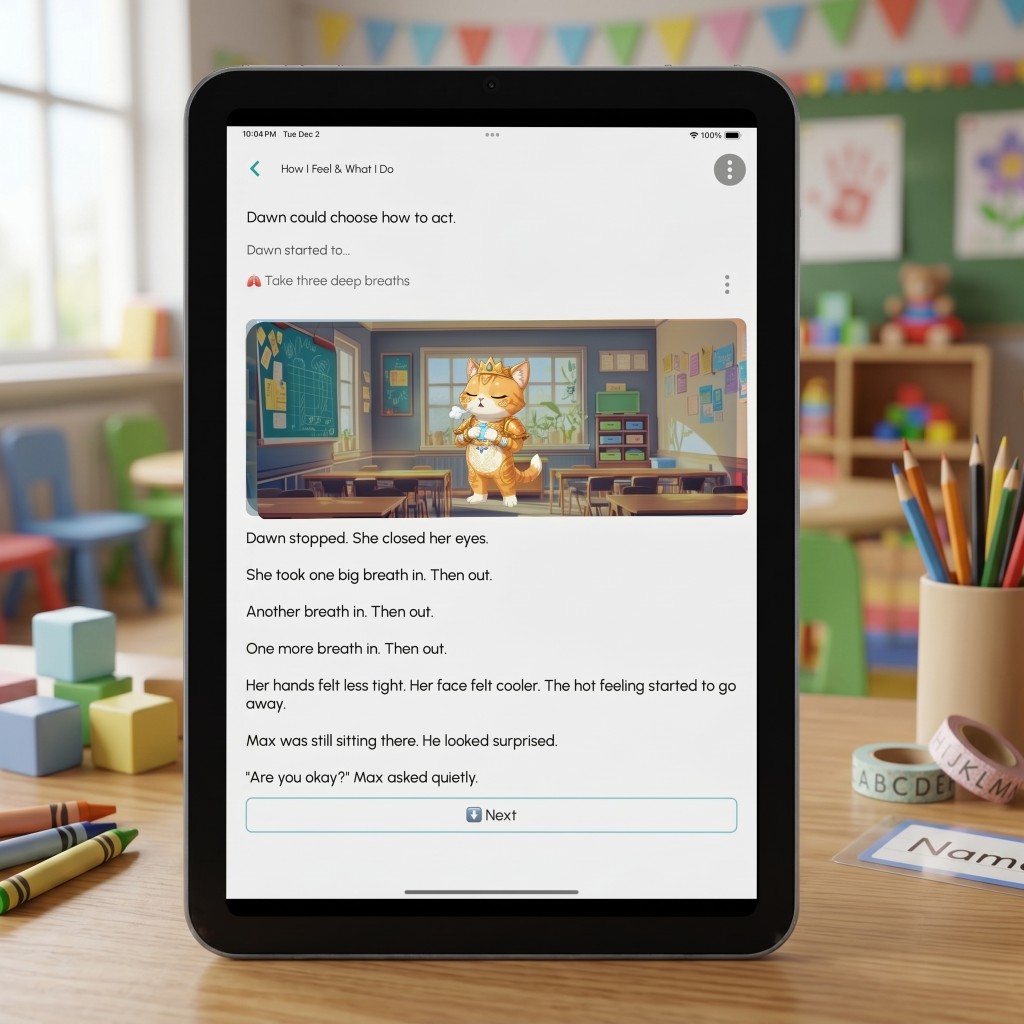
A Chromecast-enabled tablet
Pre-loaded with the K and 1 sequence, ready to cast to any classroom display. Logged in, locked down, no setup. Yours for the school year.
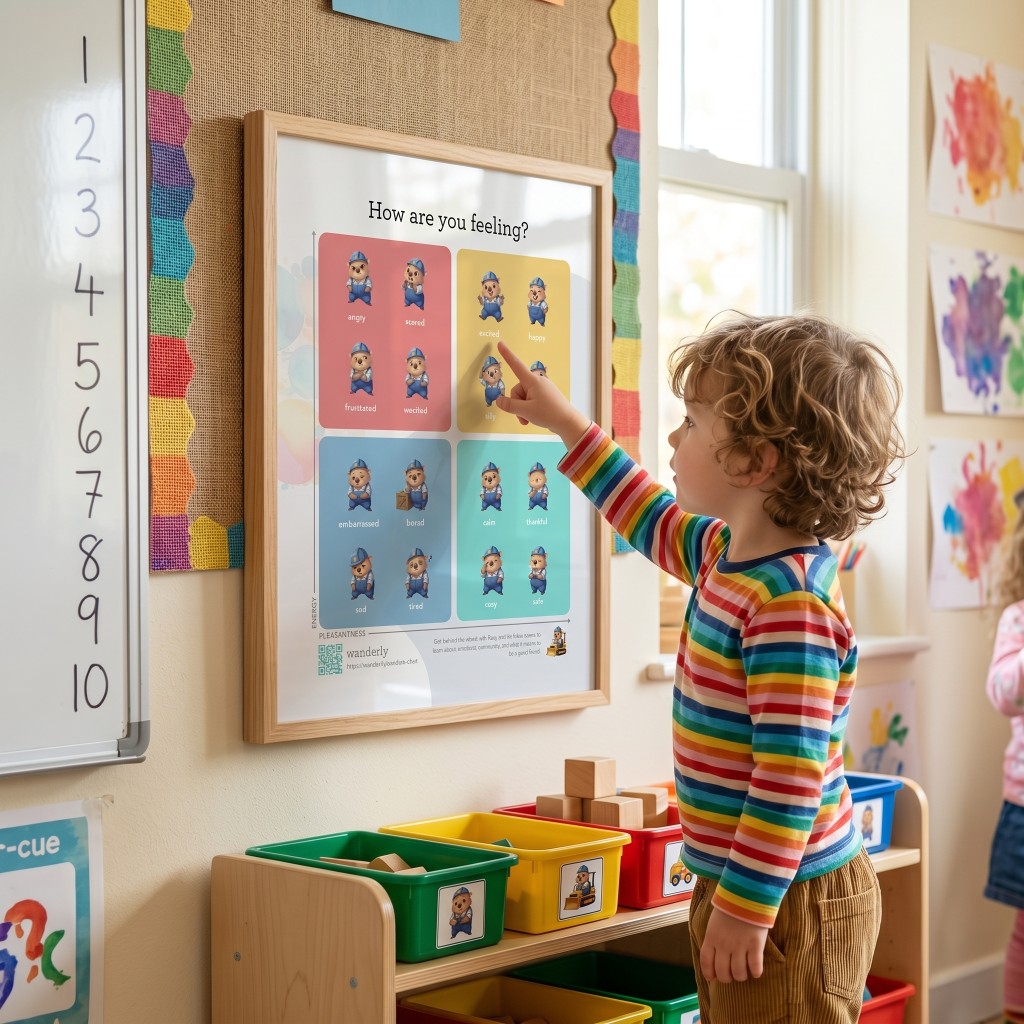
A classroom emotion chart
The same 16 feelings the kids meet inside the stories — on the wall, in their language. Used at story's end and any time a kid needs a word.
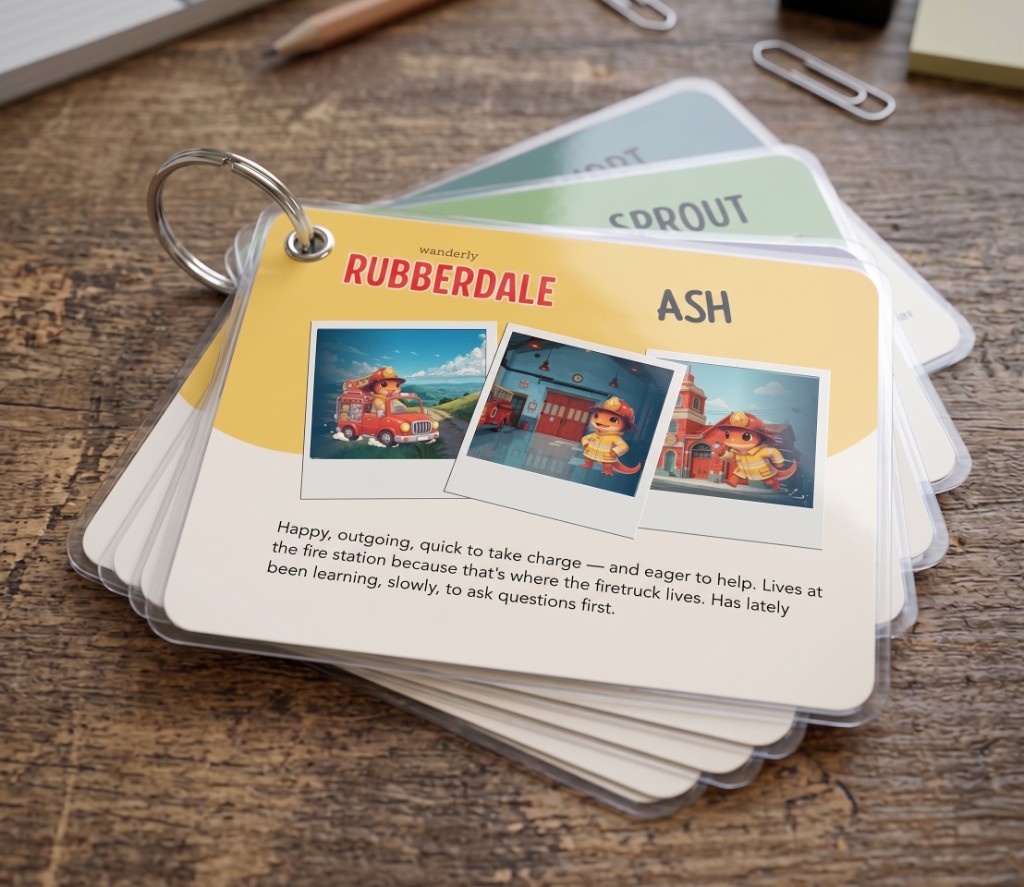
Character cards
A deck of palm-sized cards: one per character. Front is the portrait. Back is the SEL theme they carry and three questions to ask the class.
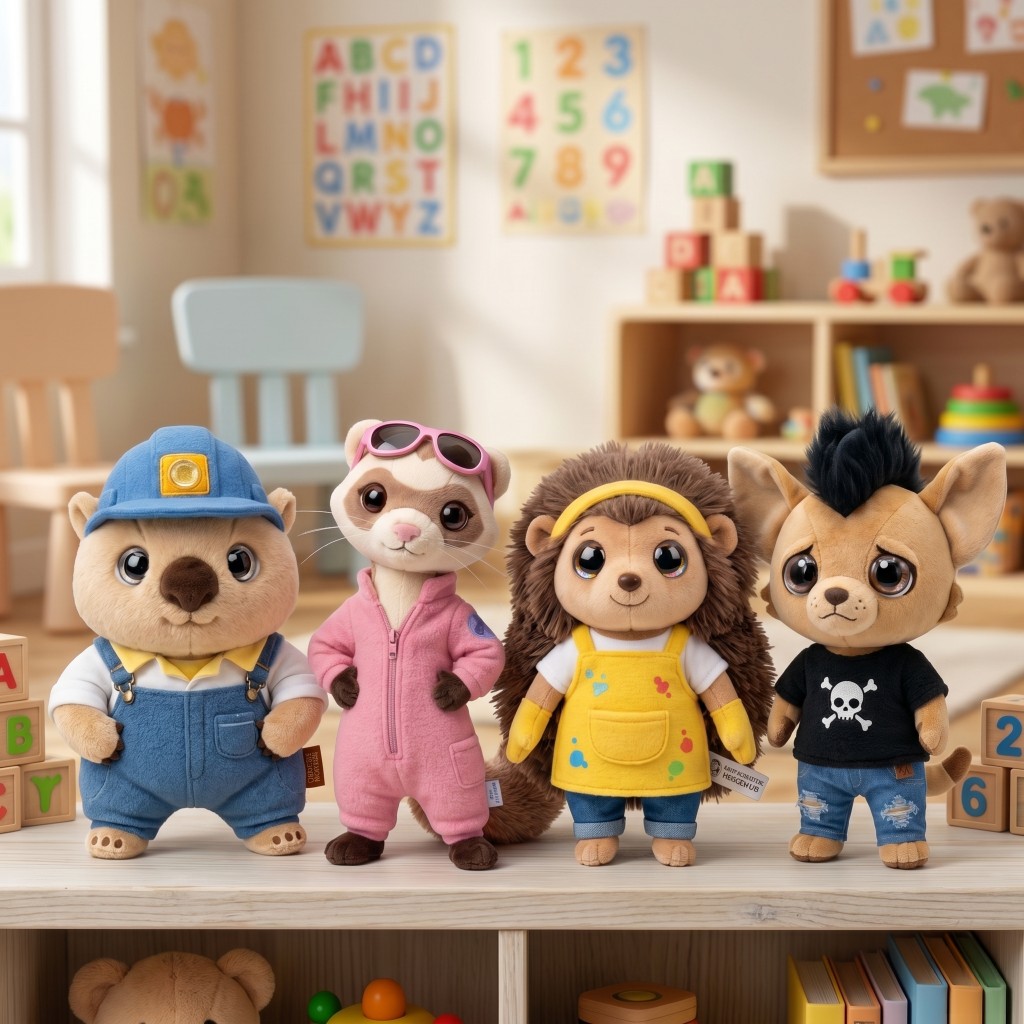
Character plushies
Each plushie matches a character in the stories — and gets passed around as different kids step in to make the choice. Holding the character builds empathy: when it's their turn, the choice is the character's, not theirs alone.
A printed scope & sequence, a one-page parent letter (English + Spanish), and a teacher Slack/email channel with Laura and the team.
What people are saying
Backed by clinicians. Loved by families.
“As a clinician, I wholeheartedly endorse this interactive storytelling app. It creatively integrates cognitive-behavioral strategies into engaging stories that empower children to recognize and reframe unhelpful thoughts. By guiding children to see that they have the 'superpower' to feel better, it not only fosters emotional resilience but also helps them feel less alone in navigating challenging emotions. This app is a thoughtful, imaginative, and evidence-informed tool supporting a child's mental and emotional growth. It is a wonderful program that can be used in schools, homes, or therapy practices.”

Hilary Katz
SSW, LICSW, LCSW-C
Scope and sequence preview
A Year of Stories at a Glance
Each month has a theme and a handful of anchor stories. Skills are laddered — kindergarten names feelings; first grade examines them.
Kindergarten
Six strands, woven through the year.
01
Knowing my feelings
02
Being in a community
03
Being a friend
04
My body, my no
05
Noticing what's fair
06
Believing I can
CH. I
Summer
Getting ready for everything new.
SUMMER
Preparing for kindergarten
A first day, a new building, a new everyone. Stories that help your child picture it before they live it — and feel ready for hellos and goodbyes.
drop-off · new-routines · identity
CH. II
Fall
Joining and belonging.
AUG · SEP
All are welcome
Joining a new community. Learning new patterns — classroom to recess and back. Getting to know your friends, and letting them get to know you (even if you're shy).
belonging · listening · transitions
OCTOBER
Sharing and taking turns
The small hard stuff — sharing a toy, waiting in line, working it out when two kids want the same thing. Naming what you feel when it happens.
sharing · turn-taking · feelings
NOVEMBER
Gratitude and different holidays
A real thank-you. And — noticing that families celebrate differently, and what to say when you're a guest somewhere new.
gratitude · difference · manners
CH. III
Winter
Learning what's fair.
DECEMBER
Self check-ins for the holidays
Holidays are a lot. First self check-ins — noticing when you're hungry, tired, or tipping over. And what to do about it: a breath, a stretch, a quiet minute.
self-regulation · pause · check-in
JANUARY
Fair, unfair, and telling a grown-up
When something isn't fair — to you, or to someone else — what do you notice? When is it a "tell a grown-up" moment, and when is it tattling?
fairness · telling-vs-tattling · difference
FEBRUARY
Body boundaries and strong-no voice
Safe touch. Walking away when a friend isn't being kind. Practicing the strong no-voice out loud.
body-autonomy · strong-no · telling-vs-tattling
CH. IV
Spring
Caring for the world around me.
MARCH
Knowing myself, making choices
Believing you can learn hard things. Noticing what you're good at and what you're working on. First taste of cause and effect — choices have impact.
self-awareness · optimism · choices
APRIL
Caring for our environment
The playground, the classroom, the block. Honesty and fairness with the people around you, and the first small ways to care for our planet.
stewardship · honesty · small-actions
MAY
Goodbyes and what's next
Saying goodbye to the year, the teacher, the room. And hello to summer and to first grade — what you'll carry with you.
goodbyes · appreciation · looking-ahead
Reach out for more
See exactly what your class would explore.
The full scope & sequence — CASEL-aligned, with stories mapped to every monthly theme. We’ll send it straight over.
Bring Wanderly to your school
Tell us what you’re looking for and we’ll follow up personally.